Showing posts with label Considerations For The City Dog. Show all posts

5.01.2020

Red flags in Petfinder

We're on day 50 of quarantine in our city and I'm not going to lie. It's hard. Impossibly hard. But, I have had a bit of time to do some things I was hoping to do long ago that I never got around to.

One of those things was recording something relevant to my book, Considerations for the City Dog, how to find a pet ethically using the Internet. Which, it turns out, is harder than one would think. I've always wanted to show people how to navigate Petfinder and similar sites because there are some concerning trends that have been going on for years. And I'm saying this as a rescue advocate, someone who rescues and works for a rescue organization. Click-and-ship culture's effect on the acquisition of pets has pros and cons.

In watching the video above, start at around the 9-minute mark where we take a look at the first page of Petfinder. I have a search on for within 100 miles so I could see the dogs before making a decision - seems reasonable. The first page has 48 dogs, all are promoted on being within 2 miles of my zip code.

Only two, the first two dogs featured on the site, are actually here.

Where are the local dogs? They start showing up with a higher frequency after page four, which seems really unfair to the dogs who are here, who you can meet. But where are all these other dogs from? They say they are here...

The rest of the dogs on the site claim to be within two miles of your zip code, but in the demonstration, these dogs are all in the American South. After someone commits to a dog because the description sounds perfect and the face is so photogenic, the rescue group will then ask you to drive to Connecticut or other neighboring states to get your new pet. 

Have you ever thought about why that is? They are trying to duck a legal loophole, which leaves you unprotected if this dog isn't a good fit, isn't healthy, or isn't as promoted.


This video takes some clips from a longer presentation I've given a few times, most easily accessed through the Pet Professional Guild.  (Though, if you are a dog training professional or work with animals in a professional capacity, you can find a professionally targeted version here through Raising Canine). 

Responsible breeders or shelters will not lie to you, nor would they ask you to drive across state lines to a parking lot to pick up a pet just to get around Massachusetts State Law. Good breeders and rescues will ask you to meet the dog on site - and if they aren't asking you to do that, I'd say walk away. The rules are still the same.

If a rescue (or breeder!) feels they need to misrepresent where the dog lives to get clicks, that's really unfortunate and I question their ability to be ethical in the sale, the transport, and to take any financial responsibility if something isn't going right. For example, if someone were to get a dog shipped directly from Texas, a dog who is described to "love kids," but this dog doesn't like your kids, or the dog isn't handling the new environment well, what are you supposed to do? The dog who was supposed to "get along with cats" kills your cat? What if the dog is really lovely, but hates the city and can't go outside - she's shivering in a corner for days? 

The rescue will not come to pick the dog back up from Texas.

What if the dog arrives with a highly contagious disease that could do harm to existing animals in your home? What if the "house-trained dog who wants to be your best friend" is actually a former puppy mill stud dog who has never left a crate and he pees everywhere - including on the other dog in your home, and he barks non-stop? 

As imaginative as all of these possibilities are, they are all taken straight from my case files in the last few years. They all have one thing in common: They were all picked up over state lines, and there was no recourse for the family. They were on the hook for thousands of dollars in behavior work, medical work (one had to go straight to the ER from the transport for a lung infection - $2,000 later, the family could bring him home, and the rescue wouldn't help. "He was healthy when he got on the truck. Not our responsibility.")

No. Not all dogs who come up via transport like this end up as a tragic tale. Truthfully, most do not. My current dog, Captain, came from North Carolina, but, we met him locally and were able to make a decision if he was the dog for us (he absolutely was). This was after meeting other dogs, some even made it into our home for a short period of time, before realizing we were not a good match for those dogs. One was so sound phobic - and we live near two highways - it would have been torture for that dog to live her life here. One loved our daughter at the shelter but after we got home the dog developed severe separation distress, and that wasn't something we could handle with a 3-year-old in the home with an active schedule. That wonderful little dog went on to live with a woman in a wheelchair who never left home. They were a perfect match!  

Many of my students acquired dogs by driving out of state and it was fine. Many of these dogs are great learners, fantastic friends, and perfect companions. 

But when it DOES go wrong, it tends to be because dog and family weren't appropriately matched and there is no support after the dog is homed.
So please, exercise some caution. Do your homework and reach out if you have questions. 

For the record: I will always rescue my pets, but there is a way to do it responsibly. Going through groups like the MSPCA, Animal Rescue League, New England Brittany Rescue, Northeast Animal Shelter and others who have dogs locally who you can visit, whether through an established foster network or a brick-and-mortar facility is the way to go for rescue. Many even import dogs from other states get a reliable profile and ensure their health before sending them into a home. Just like I would always advise clients who want a purebred dog to do their homework and always meet the puppy at the breeder's home first, I always advise meeting a rescue or shelter dog first from a place who has a reputation of helping people after the dog goes home. 

Saved shouldn't be defined as "No longer in a shelter". I can't tell you the number of dogs who are not saved because they went to a home - they are more stressed because they weren't put in the right home or environment despite everyone in the home doing everything they can for the dog.

Saved should be qualified as thriving behaviorally and physically.

If you're going to do this, I beg you to do it right because when this is all over, my colleagues and I would love nothing more than to come to your home and work with you on sit, down, stay, and stop jumping - all the things many of our clients expect to work on when they bring a new canine companion into their home. The risk of going in without support or bringing a dog in sight unseen might mean we'll have to have bigger, harder, more challenging conversations at the end of this quarantine, which is more stress on you, and ultimately more stress on your new dog. 

9.17.2019

Environmental Considerations In Urban Dog Training

Have you ever wondered what it's like to see the city experience from your dog's perspective? 


Let's take hallways for example. Hallways are great for people. They are often the quickest way from point A to point B. If we're talking about a multiunit apartment building, then straight lines are the best way to put several units on a floor, then stack those floors above each other for maximum space usage, or maximizing the monthly income for the building owner.

When I see a hallway like the one below, I just think about how much fun it would be to rollerblade or skateboard down it.

These 400 square foot units would be approximately 7 billion dollars a month in my home city of Boston. 

However, this is perhaps more symbolic of the feeling dogs get walking down the hallway:


Consider what it would be like if there are doors that open (seemingly) randomly on both sides of a dog. That can be scary, especially if a kid jumps out screaming because she's hopped up on sugar. To a dog, it might look like people are popping out of the walls like the worst magic trick imaginable. There is nowhere to run, and assuming the dog is leashed, this can certainly add to the frustration. If there are two dogs walking towards each other, then you can imagine how things could escalate quickly for everyone.

Dogs can hear everything on the other side of each door with their sensitive hearing.

They can smell all the food created on the other side of each of these doors in addition to your neighbor's nail polish remover, or the cat box down the hall. All of this is undeniably overwhelming to a dog. 

Straight lines are essentially the third circle of hell for dogs, so hallways and sidewalks are just harder for dogs in many cases. 

Dogs do circles really well. Circles are just simply more polite. Exhibit A: 

dogs game show funny wheel of fortune butt sniff - 8140613632
Circles! 
But circles are not great for people as we think in lines when designing urban spaces. Back to hallways. If there is an elevator at the end of a hall, it might look like this to us: 

Pretty inviting for an elevator. 

However, to some dogs, this just looks like a trap. The doors open, people go in, then disappear. The dog might as well be walking right into this: 

Post image
Spoiler alert for Stranger Things, Season 3 

I have many clients who just can't get their puppy house-trained on the fifth floor because the puppy is too scared of the elevator. In addition to just getting into the doors, add the dropping sensation of what amounts to a moving box (flying coffin) the puppy is now trapped in. Each passing floor the puppy feels that sickening stomach drop story, by story, by story. Don't get me started on the kid who gets on the elevator with Axe Body Spray. 

How to teach your teen to use AXE body spray + a locker room printable


It's no wonder so many dogs struggle.

And this is just the living space! They all eventually have to venture outside where there are more straight lines, more noises, more traffic, and the worst of the worst to dogs everywhere: Skateboards by the dozens.

Because of these considerations and unique issues we are finding in urban dog training, Susan Smith of Raising Canine has invited me back to speak! This time, I've been invited to present on specific issues relating to training dogs in more populated environments. If you are working as a dog training professional in the city, everything you know as a dog trainer might go out of the 7th story window.

If you are a dog trainer interested on taking clients in the city, or if you are looking for some creative workarounds for common urban dog training issues, please feel free to join the webinar! It'll be October 2nd, 2019, at 10:30 Central (11:30 Eastern). I like to have fun with my presentations, as you can see.

Susan also has other webinars, many are free, some with CEUs, from top professionals like Jennifer Shryock (Family Paws, a resource I recommend to every new parent with dogs); Ian Dunbar; Teoti Anderson; Jolanta Benal; Jean Donaldson, and Nicole Wilde to name a few.

So, grab your autumnal beverage of choice, click on the link, and let's talk all things #citydog from the comfort of wherever you prefer to watch the internet. 

10.12.2017

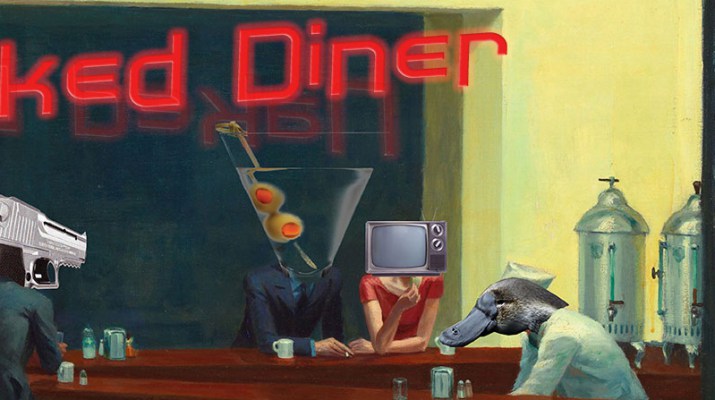
Naked Diner Podcast

A few weeks ago, Andy Hall of the Naked Diner Podcast asked me to participate in a discussion.

Now, this is not exactly my typical audience. Generally, I tend to talk with dog people, schools, or present to pet-related podcasts. This particular podcast is a comedy podcast but they have had amazing guests, such as Trae Crowder and W. Kamau Bell.

So, when in Rome...


The questions we addressed in this particular discussion went from "So, are puppy mills bad?" and "can dogs take pot?" to, "What's a Blue tick? Is that a dog or is someone on the Internet Rick Rolling me?"

Oh, and we all swear like Pirates, so if that's not your jam, you might want to sit this one out. But if you are into the NSFW interviews and also want to hear a dog trainer talk about dogs to a not-dog-training audience, then here you go!

We start the conversation at 9:00 with perhaps my favorite quote from Andy. 

"I posted on my personal Facebook page about talking about dogs. You know? We've had a lot of people, famous people on this podcast and no one ever has questions...You mention dogs, and everyone comes out of the woodwork."

This was perhaps the most fun I've ever had talking publically about dogs, how to become a dog trainer, how I got started as well as what dominance theory is (and more importantly, why it's bunk!) and all the soapboxes you have known and loved on this blog for the last 11 years. They are addressed in full, with both seriousness and humor. It was a joy!

So,  Andy and Jack? Thanks so much! See you guys again soon!
 -M3

6.14.2016

#BSLisBS Part 2: Therein Lies The Rub

I've written before on the absurdity of Breed Specific Legislation (BSL) and why BSL is BS. It hit home for us last year when we had Cinderella, a 65 pound "pit bull" for 48 hours before our landlords decided we couldn't have a pit bull type dog on the premises.

Cinderella is now living with three kids, one of which is autistic. She is doing wonderful work helping her live life to the fullest, which is really what this dog needed to do.


And while Cinderella didn't work out for us, she really got the best possible gig and is living a fantastic life. While we were angry, heartbroken and all of the things you would expect having to turn a dog into a shelter for doing nothing wrong, and having to explain the word "discrimination" to our three year old daughter, we understood. Our next dog would not be a pit because at the end of the day, the landlords make the rules and though we are adults, we have to abide by those rules.

Our search got much harder, but after several months of looking, we brought home Captain Love in December of last year from New England Brittany Rescue.


(Best guess? Beagle/Pointer?)

And herein lies the rub regarding BSL and why I think it's utter BS.  

Any dog with a slightly blockier head can be considered a pit bull by people who know Jack about dogs.

Even if that dog is Captain Love.

Today, our landlords had a home inspector come in. Captain jumped at the door. Aislyn was trying to open the door, so my focus was on Ace, not the dog. When the inspector and landlords girlfriend came into the apartment, I didn't have full control of Cap. He jumped. I put a leash on him (after he slipped his collar!), got him working, and moved him to an open area of the apartment. I got his focus back in less than 30 seconds, which is more than I can say for my preschooler who was jumping all over the landlord's girlfriend and inspector.

They were here for 5 minutes. They left. I did apologize for his overexcitement, but she said it was fine. I don't like my dog jumping, but I handled it in an appropriate manner - as appropriate as one can when someone is coming into your house with a key.

Six hours later, I got texts from my landlord asking if Captain Love was a pit bull. This affects his insurance (which I'm aware of). The inspector told our landlord that the dog "looked like a pit bull and was terribly managed." Frankly, Aislyn was managed poorly, and the dog - after the initial jumping at the door, was totally fine and attentive. From her vantage point though? Yes, I could see that she would think as someone who doesn't know dogs might think that this is a literal shit show.

The last hour has been an anxiety provoking experience where I'm having flashbacks to taking a perfectly sound dog to a shelter, mixed with google searches of "where to find a cheap RV in a hurry?" because there is no way on earth that we are giving up this dog.

It's hard enough to be in the dog world and educate people about who is qualified to help with dog behavior. It's harder still when home inspectors are suddenly dog breed enthusiasts, and landlords can technically evict you for having any dog that "looks like a pit."

The slippery slope of people seeing what they want to see in dogs can affect people in a society where BSL is a real-life thing. Anyone, ANYONE who *thinks* a dog looks like something can say something that has real-life consequences to families who love their dogs. It's happening RIGHT NOW to Dan Tillery, a performer in Michigan who has had two veterinarians say his newly adopted dog is an American Bull Dog - but the cops think that he's a pit bull, and therefore, they can remove the dog or slap fines until the dog is out of the jurisdiction.

I stand with Dan and Diggy. #BSLisBS


It's been awkward since the first time our dog had to get relinquished by no fault of her own last July. Feelings were hurt and things were awkward going forward, which is not how I hoped to remember this place or the people we rent from. They are lovely people - truly. Yet one thing that hits an emotional chord can really affect relationships and it's going to be just plain weird, awkward and uncomfortable now. Particularly when my vocation is working with dogs and people all day long, and to not be trusted to follow the rules set by our landlords (because with that distrust, it seems like we are sneaking out to get a secret pit bull) is really, really, really insulting.

Even if Captain Love, or Diggy was part pit, it shouldn't matter. Even if either dog was full pit, it shouldn't matter. As stated before, personality should matter - we all have stories of getting bit by dogs that were XY or Z breed. (Mine is husky.  A friend's is Basset hound. Others still are pit bulls. My vet friends all have a demon retriever story in their arsenal.) But even if you take that part of the argument away and say we are not discussing what is, and what is not, a pit bull ----

---Today I had to have a conversation with someone who controls my living space about the block-headedness of my pointer/beagle mix and was nervous about it because I know how people see dogs who have skulls that are a 1/4" bigger than a goldendoodle's. Today I feared my husband and I would be packing up this week with our kid, dog, two cats and we'd figure it out later. That panic is now gone (landlord said "no, we're good.") but what happens the next time? Every time he walks by our front door, he's going to look in at the jumping "pit bull" and question it.

Every time.


With Captain jumping at the inspector, our landlord is now positively reinforced for telling us that pit bulls can't be here because if that pit wasn't managed properly and bit the inspector, he'd get sued. That pit bull "would have bit" and therefore, he's likely thinking he's saved himself from getting sued.

(Suffice it to say, someone would absolutely be sued if any of our dogs bit an inspector or anyone on the premises: it would happen if it was Captain Love, Cinderella or Sadie-Jane. It would have been much more likely with fluffy Sadie with a stranger coming into our home and her doggie-dementia than the other two canine residents. Zeppelin would have slept through it.)

I wonder if the inspector would have said a word if my Golden retriever jumped up to say hi while I had my back turned to wrangle my 3-year-old? If she was afraid he was a pit bull, her guard would have been up and she'd be more likely to say something - which is really the case for anyone who has a 35-70 pound, short haired, stocky dog with a block head. And for that:

#BSLisBS.

-Melissa McCue-McGrath, CPDT-KA
Author, Considerations for the City Dog


6.10.2016

Home Turf

Hi everyone !

 Several weeks ago, I saw Dr. Nicholas Dodman present on separation anxiety at the Nine-Zero Hotel in Boston. It was such a lovely presentation (and I applied some of what was learned on Captain Love's separation sadness at departures). After the talk, my dear friend and colleague, Vivian, introduced me to the organizers of the event - Cold Noses Foundation. They seemed excited to hear about "Considerations for the City Dog" and invited me to present on the book!

 Suffice it to say, I'm really excited.

 I'm also a bit nervous.

But still totally, 100% excited.


 The presentation is on 6/21, downtown Boston. The tickets (like the tickets for Dr. Dodman) are $15.00 and all the money goes back to help Cold Noses Foundation set up spay/neuter programs & educational programs around the globe to prevent homeless pets - a huge part of what #HandsOnFirst is all about. Not only am I flattered to be given the privilege to speak, but I'm proud to be given the opportunity to have my talk give back to something I wholeheartedly support and have been publicly speaking about for the better part of the year:

 Here on DogCast Radio.
 Here with Don Hanson & Kate Dutra (part 1 & part 2 ).
 At Tufts Cummings School (for the veterinarian behavior club)
 At Massachusetts Vet Tech Association.
 Here is the webinar for the Pet Professional Guild.
And here for Raising Canine coming this October.

But this one - to get a platform in my home city to have the ticket sales go back to fixing the biggest issue I see in the training industry over the last decade? It's really, really incredible and I'm really looking forward to it.


If you are near Boston on 6/21, I'd love your support - come down to NineZero to see this presentation (which covers many of the topics in the book, including #HandsOnFirst). If you can't come, you can still make a huge difference. I'd really appreciate you'd tell your city-dog owning friends and pet professionals about this talk. It's really not about listening to me blab on about dogs. It's about starting to look at  environment as an impact on urban pups and what we can do to be better stewards for our city-dwelling canines. That, and you're supporting a pretty sweet cause: a group putting a dent in pet overpopulation problems in underfunded areas around the world. I think that's something we can all support.

And just in case you are curious: Yes, the hotel has a bar. It's on the second floor.

~M3

3.15.2016

What DO City Dogs Need To Know?


A few weeks ago, I wrapped up my 5 part series with @2DogsTreats where we covered the elements in dog training necessary for living in an urban setting. Here they are in full with some funnies to get you in the mood for a little pup training! 

1. Name recognition (it sounds totally basic, but what do you want your dog to DO when you say his name? If "ignore me completely" isn't your answer, then check this out.)


2. Leave it (or affectionately called The Chicken Bone Command)


3. Wait 


4. Come (not "Come, please come - come back, *#&$^!!!! He's Friendly!)


"I'm not even going to try. Come back when you're ready, Sparky."

5. Heel.  (I might be playing favorites, but I really like how this one turned out.)


If you're so inclined, feel free to work on one or more of these elements for homework! 


Best, 
- M3

3.12.2016

Notably Missing From The Cesar Millan Investigation "Reporting"

There is a post going around my Facebook feed (which is admittedly 85% dog

(Reporting varies, stating the ear was "nipped and bled," all the way through to "bit a chunk of the ear off". I can't find a reputable source on  severity of the pig's injury.)
In all the reporting of this story, there is one thing that absolutely has to be addressed that's gone on for far too long. This is the thing that would perhaps quell some of the discussion of if Mr. Millan is "abusing animals" or if he's "God's gift to canine kind." The one thing that needs to be addressed is this:


Any and all reporting on Cesar Millan needs to stop referring to him as a
"self-taught behaviorist".

In the dog industry, a behaviorist is someone who:
  • Has received a certification from a science based group, usually after presenting 1500+ hours of dog behavior documentation and taking a lengthy exam going over stress signals, medication, anatomy, physiology, tools, and teaching ability.
OR
  • Has a PhD in an animal related field (like zoology)
OR
  • Is a Doctor of Veterinary Medicine who is accredited as a veterinary behaviorist through the American College of Veterinary Behaviorists.  There are only around 75 certified behaviorists through the ACVB, and Mr. Millan's name is not on the list.

The news outlets reporting on this really need to ask questions and educate the public about the following:

  • What is a behaviorist?
  • How do I find a reputable one?

By explaining what a behaviorist does and who a behaviorist is, we can avoid the tired argument of if Cesar helps dogs or not. Instead of a really emotional argument based on ambiguity, there are terms that should be defined in the reporting, and that might help clear some things up regarding Mr. Millan.

In short, Mr. Millan can call himself a behaviorist.
I can call myself an astronaut.
Neither are true.


And here is a link to Considerations for the City Dog- a book that dedicates an entire chapter explaining the differences of these professionals.


In short, if you are looking for behavior help, look for credentials and know what your behavior professional had to do before earning the  "Behavior Consultant", "Applied Animal Behaviorist" or "Veterinary Behaviorist" title before hiring. Do your due diligence for your dog's sake. If someone calls himself or herself a behaviorist, ask what they did to earn the title, and who gave them the credentials.

Good luck,

-M3

2.29.2016

What's Next?

You might remember a few months ago when there was a hilarious snafu with the US Postal Service that accidentally sent the woman I look up to the most in this industry a box of dental supplies with my name attached instead of a copy of the book I wrote. 

It could have been SOOOOO much worse than dental supplies....

Well, snafu aside, this entire experience led to a rather wonderful email back and forth between me and Dr. Patricia McConnell where we discussed in great detail some of the specific things that make living in a city different for dog owners compared to rural settings. It was really a wonderful conversation and without the Internet, might never have happened.

Thanks, Al Gore! 

She ended up writing a fantastic piece on her vantage point as an animal behaviorist from Wisconsin visiting New York City, and included some of the snippets of our back-and-forth.

(I might have swooned, but I did keep it totally cool. I think.) 

184989c8a499a6130bf5005552e314b2.jpg (236×240)
Me. Trying to "keep cool."

What came out of it was a question she asked in our conversation. A simple question, one that seemed so freakin' obvious, but after being in the city for so long it just never occurred to me to look at things from this particular angle. Her question was this: 

"Do you have a section in it that includes a hierarchy of skills for city dogs? I looked, couldn’t find it anywhere. What you said below is SO valuable! Did I miss it in the book somewhere? The only (minor) critique I’d make of the book is that I can’t find that much info that really is about ‘city dogs’ versus suburban ones. Again, it’s GREAT info, but I couldn’t find city-specific info as much as I wanted it. (ie, broken glass every where.. I NEVER would have thought of that…) Just asking, and possibly a thought for its eventual reprinting?"

Duh! Commands! City Dog Commands.
So my friends at 2 Dogs Treats gave me the latitude to address exactly that question. "What IS the hierarchy of urban dog commands?"

In the coming weeks, I'll be cross posting from the 2 Dogs Treats Blog the urban dog commands hierarchy, and ways to teach these skills. They are longer posts, often with videos and humor. I hope they can help you out. 

And yes, I'll do an eventual 2nd edition of "Considerations for the City Dog" because...my hero suggested it :)

(No longer keeping it cool. That's the last time I'll mention it, I swear. SQUEEE!)


THANK YOU!
 Seriously - all of you who read, recommended, reviewed or even helped create Considerations for the City Dog,thank you from the bottom of my heart. Thanks to you, we got up to 25 reviews on Amazon, which means that Amazon *should* start recommending Considerations for other readers who are searching books in the same category!

That doesn't mean you shouldn't review if you haven't. Amazon has tiers of how they promote books to other readers, so the more reviews the better.  If you're so inclined it only takes a moment to review on Amazon and Goodreads and it helps more than any single thing (aside from picketing outside of publishing houses changing "City Dogs Rule!")

While you're at it, review a few of your favorite books, especially if they are written by indie or "self" published authors as they don't have the long arm of a PR firm or publishing house to help get the word out. I put "self" in quotes because I think it's the biggest misnomer in the book industry. It took a team of 15 to get Considerations for the City Dog up to snuff, and bless their hearts, they all volunteered because they believed in me or the concept of the book. If there is a book you love and believe in and you know it's by an indie or "self-published" author, consider giving a quick review so they can perhaps reach that magic number. For all of you who reviewed or recommend in any way:


Thank you :) 

-M3

12.18.2015

Woof Meow Show

A little shameless self promotion:

Over Thanksgiving break, I had the privilege of meeting Don Hanson and Kate Dutra at Green Acres Kennel in Bangor, Maine. I've been a fan of their radio show for quite some time and was flattered when they asked if I'd like to participate in their radio show.

We started talking, and ended up taking a deep-dive on the rescue industry. As a result, we ended up recording enough material for two full episodes, the first of which airs tomorrow night on The Voice of Maine radio stations (WVOM-103.9FM-Bangor, WVOM-1450AM-Rockland & WVQM 101.3FM-Augusta)


The podcast version will be available Sunday night at 9pm on your favorite Podcasting App or Magical Podcastery Technological Appy Thing (tm). 

Part 2 will air on Christmas weekend! Perfect for all your travel plans! 

Thank you so much to Don and Kate for the invitation and for the conversation - we'll have to do it again because I'm quite sure we could have talked for days! If you're in Maine, these are great people who love, care about, and know dogs. Support them and listen to their show - they are really great! 


-M3

12.03.2015

My Hero, Dr. Patricia McConnell

When most people get up the gumption to contact their heroes, a feeling of nervousness and excitement washes over them.

There is a certain population where the universe bends all rules of probability and says this:

"Oh, that's really cute. Let's make this weird and awkward for all parties involved."

I am a part of that population.


Pretty good advice. It's served me well.


After attending a conference where Jessica Dolce of DINOS (Dogs In Need of Space) was presenting, I let her know that I loved her work and included her in the references of my book. We did a book swap. After she read mine, she suggested that I write to Dr. McConnell to let her know how much she affected my work and influenced the book. I was nervous, but whatever the gal who created DINOS says, I do.

So I ponied up the courage (drank shots of whiskey), contacted "her people" and in 3 minutes got a letter back from one of her assistants. "We'd love to get the book! Send it along!" She included an address.

Excitedly, I prepped the book. I thought about how to inscribe it. I sent it off.

A few weeks went by.

I received a certified letter that I had to pick up in person at the post office. I thought about all the times on Maury Povich that "the kid is yours" starts off with a certified letter...but then I remembered I'm a woman and would have remembered something like that. Then I thought I was being sued for something and totally panicked.

Turns out, a post office in Wisconsin sent me a letter. It stated that my book didn't qualify as "media mail" - which was strange because the post master at the post office told me to send it by "media mail." This includes "books" which my book actually is. They told me to cease and desist sending books as part of their book mailing program.

I was confused. I was also concerned that they didn't send my book along to Dr. McConnell.

When I called the post office and explained I sent a book, the post master on the other end of the line in Wisconsin went silent.

Then, she sighed and said the words I was a little worried to hear.

"Oh. Um...I think I know what happened."


Apparently, my book came out of the packaging between Wherever, USA and Wisconsin.

In the same shipment, a box of dentistry supplies ALSO came out of its packaging.

My envelope said "Dr. Patricia McConnell" - so naturally, the dentist supplies had to go to Dr. McConnell.

The book...is missing (later found out, because of a podcast my beloved listens to, that it is in Atlanta where all missing mail goes to stay lost.)

Meanwhile, in Wisconsin, my hero Patricia McConnell picks up a package of dentist supplies from M. McCue-McGrath with no other note. She, as anyone would, returned the package to the post office.

Some dentist, somewhere, is missing his...or her...supplies. They are in Wisconsin.


Once I found out what happened, I emailed Her People (tm). I was crestfallen, embarrassed (what on earth is she going to think?). Also, where is the book? Also, this poor dentist is missing important things!

Lisa, the Assistant Of The Year, (I'm giving her this award) laughed it off and said something about Dr. McConnell showing up with a box of dentist supplies and a quizzical look.

Two days later, I receive a letter.

Not by certified mail. Regular, won't make you crap-your-pants-in-fear mail.

In this envelope was a hand written note.

A hand written note from my hero, Dr. Patricia McConnell.

"Dear M.McCue-McGrath -

I received a box of dentist supplies from you.
I'm guessing that's not what you sent - unless you're giving me a not-so-subtle hint about my oral hygene.

If you sent a manuscript for me to read, please kindly send it again.
 - Patricia McConnell"


Yes, It's framed. This is totally normal.

I sent a new book. On the envelope I wrote:

"Includes ONE BOOK. No dentistry supplies."

The note will be framed because it's from my hero. I hope she likes the book, but right now, the universe is laughing, as am I. Well played, universe.

Well.
Played.


*Update: Dr. McConnell ended up getting her copy of the book and we had a lovely email back-and-forth about urban dogs after she read it. She ended up writing a piece on her blog about city dogs and rural dogs. Check it out HERE.*


-M3


11.23.2015

The Bark

Thank you, thank you, thank you to The Bark Magazine.


They consistently put out a great product but this month warrants special accolades.

I'm an unknown author who worked incredibly hard to advocate for my students and urban dogs all over the country. The problem with being an unknown author is...being unknown.

For The Bark to select Considerations for the City Dog for a review in their coveted winter issue (they only produce 4 issues a year!), I'm beyond speechless.

The Bark not only speaks for dogs, but they speak for the unknown author, indie author or authors of small publishing houses that might get overlooked by the Bigger Publishing Houses (tm).

Interestingly enough, I'm not the only Boston area author in this review section. Fellow New England Dog Training Club member (and longtime author), Susan Conant, is also reviewed in this particular issue. It's like I had a buddy along for this ride, and I'm so happy to see NEDTC represented in a few genres in such a great magazine.

Thanks for looking out for us, Bark, in the same way you look after dogs.

If you're looking for something special to read for your holiday travels, feel free to pick up this issue of The Bark - I hear they have some pretty great books in their reviews section!


Happy Thanksgiving,
 -M3


9.13.2015

"Considerations" on DogCastRadio!


I'd have to say in all seriousness, my interview with Julie Hill of DogCastRadio (one of my favorite podcasts about life with dogs) is the highlight of writing this book, and my profession. We had a lovely conversation where I think we both learned interesting things that both the UK and the US are facing in terms of acquiring pet dogs.

In the UK, they have a program called #WheresMum - an attempt to educate potential owners about puppy mill scams where less-reputable breeding operations will sell puppies under the guise of "the mom died at birth. It's so sad. She needs you to save her." As you might guess, this poses many ethical problems of feeding into the puppy mill industry to well-intentioned dog owners who are trying to save dogs.

Over here, I'm trying to get #HandsOnFirst to take off - my attempt to educate potential dog owners to meet dogs (rescues or pure-bred puppies) and know what a reputable facility looks like. Trucking dogs outside of state lines is a huge problem here in MA (for more about this issue, see my presentation for the Massachusetts Veterinary Technicians Association). 

And then, at the very end, my 3-year-old figured out how to turn on the keyboard and amplifier to play her version of "outro music" which had all three of us in stitches.

Julie is a professional through-and-through, and I really wish we could have met in person to enjoy an appropriate beverage. She's lovely, funny, and really takes an interest in all things "dog," .... and cheeky-toddler!

So thank you, Julie, for the conversation and the opportunity! When you come Stateside, I owe you a beverage of your choice :)

Enjoy the interview (and the conversation about dogs and fireworks) right here. 

9.10.2015

Interview with Somerville Scout

Yesterday I met Emily Cassel, the managing editor of Somerville Scout.
considerations for the city dog
This little guy was roaming the streets of Somerville at Porchfest earlier this year.
Photo by Emily Cassel.

We had a lovely chat about dogs, the book, and life in an urban environment with pups while we were sipping on iced coffee. All while my toddler slept! Life is good.

Here is our interview about the book, #HandsOnFirst and everything #CityDog!

(I admit - though it's a very sweet interview, I teared up because she included my girl, Sadie at the very end :) )
-M3


#CityDogs #UrbanHounds #LifeWithDogs 

8.22.2015

Two Free Presentations!

There are two chances to see my free presentation on keeping our urban pets happier! Bring questions, comments, and save some room for snacks. 
-M3

---------------------------------------------------------------------------------------------------------------------


8.06.2015

Our 48 Hours as Pitbull Owners

If you read anything I've ever written, please let it be this.

We need to talk about the real families that are affected by #BSL (breed specific legislation) and breed discrimination. Though we weren't looking for a Pitbull, we ended up with one and had to return her after 48 hours.

I wrote about the unfairness of BSL in the very first chapter of Considerations for the City Dog, but this was the first time we had first hand experience with it. I was able to document our story - a story that is very common - over at 2 Dog Treats.

If you adopt Jasmine at the ARL, she knows sit, drop it, and come.
She pulls like an ox, but is sensitive. Use a Freedom Harness (sz. M).

Please share the 2 Dogs Treats post, and support banning breed specific legislation.

Help us reach out to the insurance companies that will drop home owners insurance if a "Pitbull" (or mix) is on the premises.

Please share this so families with well adjusted dogs of any kind (bully or otherwise) can adopt children without having to give up their dogs first (a lawyer friend told me of that being an actual, horrible, real-life thing).

8.05.2015

Where's Melissa?

I've had some people ask where I'll be discussing Considerations for the City Dog.
Here is an updated schedule through the end of the year.

August 7th:
Interviewing with Dog Cast Radio in the UK! I'll be discussing Considerations for the City Dog and #HandsOnFirst. I don't know yet when it will air, but stay tuned.

August 27th:
Somerville Library WEST BRANCH (Davis Square)
7pm-8pm
Books and #HandsOnFirst Tees on sale ($16.00 book / $25.00 both)
Refreshments served

September 3rd: 
New England Dog Training Club's OPEN HOUSE
(for registered current students of NEDTC and families only).
Book signing table, free pet first aid presentation for registered students, and more dog-related stuff presented by our talented NEDTC staff.

September 14th:
Something's brewing for this date. Stay tuned!

September 24th:
Somerville Library EAST BRANCH (Broadway)
7pm-8pm
Books and #HandsOnFirst Tees on sale ($16.00 book / $25.00 both)
Refreshments served

December 28th:
Pet Professional Guild
Webinar
"The Petfinder Loophole and #HandsOnFirst"
Free webinar *info and login to come soon

If you are interested in having me come talk about the book, dogs, puppies, #HandsOnFirst, responsible rescue / responsible breeding, how to acquire a dog for the city, please contact me here.

7.20.2015

Advocate

Every part of Considerations for the City Dog is centered around the word "advocate."


Finding professionals that do the same. 

Educating yourself and others so you know how to find these professionals, certifications, and what makes them a cut above the rest. This goes for breeders, rescues, shelters, groomers, doggie daycare providers, veterinarians, dog trainers, behaviorists, and veterinary behaviorists. 

Today I dropped off some bookmarks at local animal hospitals and grooming facilities. These bookmarks have the back blurb of the book on them and #HandsOnFirst on the back. 

It's important to consider the spark for Considerations was the dog attack on Halloween night in which a bull mastiff attacked a female German shepherd, and nearly killed her 6'3" owner. This attack was in my city. I sat through the hearing where terminology like "aggression," "territory," "redirected aggression," and bunk theories like "alpha" were used in a grossly inappropriate manner. I tried to speak in the hearing. I tried to advocate for my city and the dogs I love here.

I failed.

I wrote a book.

That is evident in the promotional material. 

It's also important to note that this is a true story. Real people and dogs were involved in a horror story in this city. Everyone lived, but the wounds, though physically healed, are still visible.

Though the book isn't at all about the case, it is noted that it motivated me to write the book. The case, which was public, is noted in the introduction. The only time I mention the name of the attacking dog is here on this blog, using resources (like the Somerville Journal and The Patch). His name is not mentioned in the body of the book (though it comes up twice in the acknowledgements.)

I want to say thank you as well to the local animal hospital (unnamed for privacy - that ISN'T part of the news story) that stood up for their client. The vet doesn't deserve anyone showing up at his door going off about the case, and the staff doesn't deserve that either. The client deserves peace in getting her dog medical care without side-eyed glances. The animal hospital - one that I've always highly recommended, remains at the top of my list of recommended hospitals as a result of what I write next. 

The staff said that this is an important book, but the party who owns the attacking dog is their client. Though his name isn't on the materials, there aren't too many dogs who have got publicity for what he did just a couple of years ago (thankfully). It would make the owner uncomfortable to have this material facing her while waiting for her dogs nail trim, or vaccines. 

The case that sparked Considerations for the City Dog is real. There are real people who have dogs in this book, stories in this book, and sadly - tragedy in this book. But there are happy stories, success stories, and helpful hints, too. There are corrections on terminology that is misunderstood in today's dog-culture, which I think can go a long way to helping people truly advocate for their dogs. Do you know what a behaviorist is? Can you define it? Can you do the same for socialization? The manner in which I use socialization is very different than what most of my students think socialization is, though we all use the term regularly. The same for behaviorist and other terms (like territorial aggression). Veterinarians can read it and know exactly how to refer to a trainer or behaviorist. A trainer can read this and know how to find good dog walkers and vets, and vice-versa. A client can read this and help their dog. 

As much as I wish that these bookmarks were all over the Metro-Boston area, three cheers to the hospital that stood up for their client. You're what I'm writing about in this book - the good ones, and how to find them. How to find a good veterinarian, chapter 5 - these guys.

If it were your hospital, you'd want that advocacy. I know I would. 

 -M3

Book Signing This Saturday: Riverdog, Somerville MA

Hi everyone!

 I'll be doing a book signing of "Considerations for the City Dog" at Riverdog in Somerville this Saturday! The event is from 10am - 2pm.

 There will be wine and beer, but only after 12 because we have boundaries :)

 Peter and Priscilla have always supported me and my training since they opened their doors. I'm happy to be able to have my first real book-signing in my home town, the town that inspired Considerations.  You might even recognize many of the dogs in the book since many of them are 'Villans, too!

 So come on down and say hi! I'll have a few books on hand to purchase, and if you have your own already, bring it with you! We'll hang out and talk-dog for the morning!

Display at Riverdog. Thanks for the love!

 Best,
- M3

6.29.2015

10 Minutes


"The Petfinder Loophole," and why we need to define reputable rescues in the same way we define reputable breeders.

For more information, visit my post on #HandsOnFirst , why it's important, and what we can all do to support responsible rescue groups and shelters in addition to supporting reputable breeders.

If you agree with #HandsOnFirst, please share this to help dog owners find reputable facilities in which to acquire their new pets.

6.23.2015

#HandsOnFirst

While putting together a presentation for the Massachusetts Veterinary Technician's Association to promote the book, I stumbled onto something. 

Dog trainers, veterinarians, technicians, and every dog owner in the city has seen an influx of behaviorally unsound and sick dogs. Even The Boston Globe pointed out this issue in 2013:  - I referenced this very piece in the book. Everyone knows someone who got their dog off a truck in Connecticut, New Hampshire, or other state. Go around your office today and ask where people got their dogs - my bet is at least 25-30% were picked up out of state. 

That's because there is a law on the books (has been in MA since 2005) that states:

"all dogs coming into the state must be quarantined until behaviorally and physically sound for adoption." 

To get around this law, because with every law there is a loophole, thousands of dogs are trucked in to CT and other places for  new pet owners to pick up their dog. 

Not every dog is a mess. Many do great here - but many do not. Of the 85 dogs I've seen privately in 2 years, 67 have been trucked. Half have needed behavior modification medication and/or behavior plans in addition to a standard training regimen. This seemed high to me. 

So I looked on PetFinder. 

If you put in a search for dogs on Petfinder, and limit your search to 100 miles of Somerville, MA with no other restrictions (size, sex, house-trained, etc), you get ~4,000 dogs. That seems really high to me, but we are in a metropolitan area. If you click on the first dog, currently a dog from Blues Angels, it says the rescue is in Somerville MA----but if you click through to the rescue site, the dog is in Houston, TX. 

What's the big deal?

So say you are a client looking for a dog and you think you can go down and meet it. You click on a dog from Blues Angels in Somerville, MA - a shelter/rescue that we now know does not exist in Somerville, but the client doesn't know that. They pay for the dog, the rescue talks them into driving to CT to pick it up, and now the rescue has moved a dog that hasn't had behavior testing, or passed any standardized veterinary care and has gone through a traumatic transport. When I see that dog, a few weeks later, and it's unable to adjust to the city, the owners are frustrated, and the rescue won't take responsibility, everyone is frustrated. Veterinarians are seeing cases of dog flu related to unsafe transport, other highly contagious illnesses, and parasitic illnesses like rocky mountain spotted fever (a tick borne illness indigenous to the south, but we're seeing more cases here because of sick dogs being shipped).

The most extreme case in recent history was dog that needed all of his teeth removed, expensive parasite treatment, and treatment for pneumonia as soon as he got off the truck. This dog's new owner spent well over $1,000 immediately after transport. When I saw them a week after getting the dog, I recommended behavior modification medication and a more expensive specialist because the poor guy was very likely a former puppy mill stud. He jumped off a sofa and broke his leg because he didn't know that where the couch ended there was a significant drop. He was sold as a dog from Georgia who would be a "lovely family pet. He can walk on leash, doesn't bark, and is a low-key pomeranian." The dog peed on everything in sight (including the other dog), barked incessantly, and walking on a leash? Um...nope. Utter panic as soon as he was tethered. Did the rescue step up? No. The rescue was in Georgia the onus fell on the owners to pay for all of this. They were awesome and committed to this dog so he could experience love, but what would you go through with a dog like this? 

Now, imagine you're a dog owner with an undersocialized, sick dog in Somerville. The onus is now on the owner to pay for behavior consultations, behavior modification medication, and veterinary care - sometimes over $1,000 to save a dog. A dog they were promised is "a healthy, happy pet." 

The same thing happens for 10 out of 15 dogs on that first page. 

There is no way to meet the dog first. I've reached out to some of these rescues flying under the radar. None of them acknowledge they are operating illegally. They just send me an application, tell me how many dogs they have sent North and ask if I want the dog shipped through a particular shipping service.

In my opinion, this is as bad as the puppy mill industry. The dogs I see, the ones with problems - 67 out of 85 - when evaluated, present with similar issues to those from puppy mills: 

-Clinically undersocialized
-Few (if any) coping skills
-Issues with crates
-Fear of strangers
-Fear of loud noises / any noises
- Awkward social behavior 
- Reactivity to other dogs, strangers, or outside stimuli
- Constant Stress

When I contacted PetFinder on three documented occasions from February 28th of this year to May 24th, I was either met with "there is no restrictions to who can adopt these pets," - which is false. MA has a law as to who can adopt these pets without quarantine; or met with no response. 

Today I went to Twitter to say "Hey - look! A thing!" and they said they'd look into it. I bet if this starts to get more attention, the rescues would find a way to skirt the law, but it might be harder. We HAVE to start talking about this, and praising the good rescues and shelters who are making sure the dogs are safe, sound, and well-suited to their families. If they aren't, then they have resources available to help, or even take the dog back. Dogs can be a fifteen year commitment. If you don't have support, success can be harder. Particularly for #CityDogs. 

When contacting individual rescues skirting the law, they were all "individual / independent rescuers saving dogs." While I'm sure some are great at what they do, I can say given the number of dogs I'm seeing fail here in cities from well-intending rescues and well-intending dog owners saving dogs from terrible conditions, the behavior evaluations are failing. We have to do better. We have to put our hands on these dogs prior to adoption, and cease the culture of picking dogs up from out of state. Rescues can still send dogs to brick-and-mortar shelters here so people can see the dogs first, which is always advised. 

While one hot day does not indicate global warming, a trend in a direction does. This is that trend. 
67 of 85. 
That's quite the trend. 

Additionally, the website Adopt-a-Pet.com has Al-One Dog Rescue using "Sommerville, MA" to get around the loophole. If they can't spell the name of the town they are fake-operating in, it's probably a good indication that they aren't really here.

Canada is talking about the US rescue dogs that are behaviorally unsound shipped to them. We need to talk about this in the Northeast because we are all seeing it.

As a result of this, I'm starting a new campaign: #HandsOnFirst to promote people putting their hands on dogs prior to adoption, prior to purchase, prior to rescue. This goes for rescue, shelters or well-bred dogs. We can still ship and rescue dogs - as long as they are going to a reputable foster or a brick and mortar shelter prior to adoption. 

But this system as it stands now is wickedly broken. 

Also, so no one can say I hate rescue, every pet I've owned as an adult (except for a snail and fish - those were presents from my dad to my daughter!) were rescue. We are looking for a new rescue dog, and I'm seeing it's VERY difficult to find a rescue dog that is here for us to see in person because of the dogs flying under the radar that I can't meet first. We will likely always rescue in this home, though that is a conversation between me, my husband and my daughter. Local dogs are getting overlooked in favor of these more exotic rescues from the South, from Puerto Rico, from Iraq, from Afghanistan and now...Thailand and Korea (food dogs that are now being shipped as pet dogs in urban centers.) Yes, they all need help, but we need to sort this out so we don't make this worse.

I don't hate rescue - I really, really, really don't. I don't like unethical rescue, and I don't like seeing 2/3's of my students struggling and getting in over their heads because they wanted to save a dog. 

 This is on the verge of being a huge story. I know it. If you talk with Vets, Technicians, Certified Dog Behaviorists (Iaabc.org/ccpdt.org), rescues who are doing a good job, rescues who are skirting the law, and certified dog trainers (ccpdt.org / kpa.org /iaabc.org) - there is a lot here to unwind. 

There is a lot to say for puppy mills, irresponsible breeders and the like - but that is getting attention. I think this is something that needs focus, too, because the more people get burned by rescue, the fewer people there will be to rescue. We owe it to these families and their dogs to do better and come up with solutions. This is a start, but #HandsOnFirst is all I got as a solitary person trying to do the right thing for dogs. This is a way we can put responsible breeders, responsible shelters and responsible rescues at the forefront without starting an argument of rescues vs. purebred dogs, which doesn't help anyone. 

And no, just putting your hands on a dog does not indicate that this will be a match made in heaven - three of my toughest cases were all local dogs. That said, at least the family could meet the dogs first, and have a broad idea what they were getting into prior to bringing the dog into their home. They could bring a certified trainer to assess the dog prior to adoption. One of the owners actually wanted the tough case, and she's a superstar who is in a good place to take on these tough cases. But for a family who is looking for a sturdy, well-adjusted family pet, getting a dog sight-unseen is not unlike signing a pre-nup after meeting some dude on Match.com.

#HandsOnFirst.

Please.

-M3