Melissa McCue-McGrath, CPDT-KA is a Boston dog trainer with 15 years experience in sports, manners & behavior. She wrote Considerations for the City Dog and contributes to NPR's Car Talk FIDO blog and Maine Dog Magazine. She's the co-Training Director of NEDTC, the oldest AKC obedience club in the US.
In today's Q/A, we have a terrier puppy who loves to escape, but also won't come back for food if she does get out. So, we break this down into two different topics and address them both!
1. How to keep a dog from escaping
2. How to find what is reinforcing to a non-food hound
The lesson is here:
Also, in this video, Melissa is still crisis parenting in a pandemic while working from home:
We talk about how to search for Flirt Pole without stumbling down an unintended sex dungeon rabbit hole:
and we talk about how hunters bathe who in doe urine for hunting season actually might be onto something with dog training...
Ew.
I know, but maybe it'll help you get your dog to come back to you if he or she escapes - not bathing in doe urine.
I'm not a monster.
I'm thinking just reasonable amount of doe urine ...maybe on a tug toy....if your dog is into it.
Let's find out how all these string together, shall we? Because, I don't think dog training should just be fun. I think it should be funny.
*****
If you have questions about living life with dogs, feel free to add them in the comments section here or feel free to contact me! Until next time!
Have you ever wondered what it's like to see the city experience from your dog's perspective?
Let's take hallways for example. Hallways are great for people. They are often the quickest way from point A to point B. If we're talking about a multiunit apartment building, then straight lines are the best way to put several units on a floor, then stack those floors above each other for maximum space usage, or maximizing the monthly income for the building owner.
When I see a hallway like the one below, I just think about how much fun it would be to rollerblade or skateboard down it.
These 400 square foot units would be approximately 7 billion dollars a month in my home city of Boston.
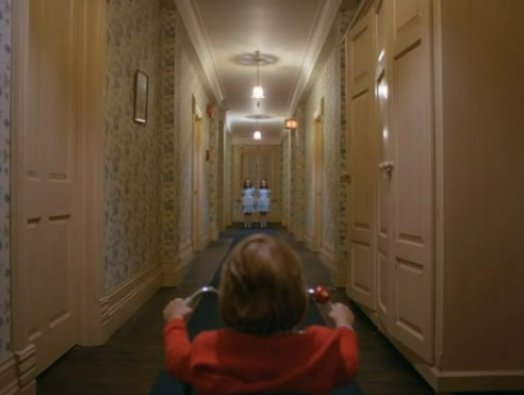
However, this is perhaps more symbolic of the feeling dogs get walking down the hallway:
Consider what it would be like if there are doors that open (seemingly) randomly on both sides of a dog. That can be scary, especially if a kid jumps out screaming because she's hopped up on sugar. To a dog, it might look like people are popping out of the walls like the worst magic trick imaginable. There is nowhere to run, and assuming the dog is leashed, this can certainly add to the frustration. If there are two dogs walking towards each other, then you can imagine how things could escalate quickly for everyone.
Dogs can hear everything on the other side of each door with their sensitive hearing.
They can smell all the food created on the other side of each of these doors in addition to your neighbor's nail polish remover, or the cat box down the hall. All of this is undeniably overwhelming to a dog.
Straight lines are essentially the third circle of hell for dogs, so hallways and sidewalks are just harder for dogs in many cases.
Dogs do circles really well. Circles are just simply more polite. Exhibit A:
Circles!
But circles are not great for people as we think in lines when designing urban spaces. Back to hallways. If there is an elevator at the end of a hall, it might look like this to us:
Pretty inviting for an elevator.
However, to some dogs, this just looks like a trap. The doors open, people go in, then disappear. The dog might as well be walking right into this:
Spoiler alert for Stranger Things, Season 3
I have many clients who just can't get their puppy house-trained on the fifth floor because the puppy is too scared of the elevator. In addition to just getting into the doors, add the dropping sensation of what amounts to a moving box (flying coffin) the puppy is now trapped in. Each passing floor the puppy feels that sickening stomach drop story, by story, by story. Don't get me started on the kid who gets on the elevator with Axe Body Spray.
It's no wonder so many dogs struggle.
And this is just the living space! They all eventually have to venture outside where there are more straight lines, more noises, more traffic, and the worst of the worst to dogs everywhere: Skateboards by the dozens.
Because of these considerations and unique issues we are finding in urban dog training, Susan Smith of Raising Canine has invited me back to speak! This time, I've been invited to present on specific issues relating to training dogs in more populated environments. If you are working as a dog training professional in the city, everything you know as a dog trainer might go out of the 7th story window.
If you are a dog trainer interested on taking clients in the city, or if you are looking for some creative workarounds for common urban dog training issues, please feel free to join the webinar! It'll be October 2nd, 2019, at 10:30 Central (11:30 Eastern). I like to have fun with my presentations, as you can see.
Susan also has other webinars, many are free, some with CEUs, from top professionals like Jennifer Shryock (Family Paws, a resource I recommend to every new parent with dogs); Ian Dunbar; Teoti Anderson; Jolanta Benal; Jean Donaldson, and Nicole Wilde to name a few.
So, grab your autumnal beverage of choice, click on the link, and let's talk all things #citydog from the comfort of wherever you prefer to watch the internet.
This article first appeared in the 2017 Summer edition of Maine Dog Magazine.
Captain’s Log: Travelin’ Dog
Vacationland
garnered widespread attention in March when Maine Representative, Jim Handy,
proposed a bill mandating all dogs should be physically restrained in moving
vehicles. He later decided to pull the bill, but not before it brought up an
interesting national discussion. Another area of my job is blogging with
veterinarian extraordinaire, Dr. Sip Siperstein, for Car Talk (yes, THAT Car
Talk). Together, we tackle some of the more interesting aspects of pet travel.
Some of the pieces are fluffy and silly, but when something like this comes
across our desks, we take these on, too.
In
every aspect of my job as a professional dog trainer from working hands on with
dogs to writing about them, safety is my number one concern. My biggest pet
peeve (pun completely intended) is observing dogs in the laps of drivers in a
moving vehicle. My veterinarian friends all have stories to tell about dogs that
have fallen out of the window at speed. These injuries include broken bones,
smashed skulls, eyes falling out of the socket, and skin rubbed completely off
of the body, exposing muscle, tendons, and even bones. Some of these dogs go
through several costly, painful surgeries and many others do not survive.
Additionally, if the airbag is deployed due to an accident, little Fifi will
likely be crossing the Rainbow Bridge. These cases are incredibly sad
considering they are almost always prevented by making sure the dog is not
sticking his head out of the window and not sitting in the driver’s seat. So
while I think the bill is a great one to suggest given these terribly gruesome
and potentially fatal outcomes, there are some other considerations to weigh.
Maine
still has many farmers who use working dogs to protect livestock from coyotes
and other predators. These dogs often look like 100 pound polar bears (Kuvasz,
and Great Pyrenees). They are raised from puppy-hood with the sheep they guard.
When a coyote or other predator threatens the flock, the guarding dog comes out
of hiding with her teeth bared, and typically wins. These dogs, while
incredibly social with their sheep, are often not known for their flexibility
regarding changing environment, new people, and new experiences which makes
situations of restraining these dogs by way of seat belt or crate to go to the
veterinarian a much more challenging and stressful event. I’d personally
suggest that during the socialization period, these dogs are acclimated slowly
to crates, harnesses and travel, but because their job is to live with and
protect the flock, that can be tricky.
The other
big hurdle that I can’t seem to shake relates to the safety of the harnesses
and crates that dogs would presumably have to use to get from point A to point
B. Until very recently, independent studies on the efficacy and safety of pet
travel gear didn’t exist. Every harness, crate, and restraint system sold was
tested by the company that created the device, which in short, meant there was
no standard of safety. The company could throw a piece of lettuce at the device
and suggest the harness stood up to “rigorous testing,” stamp it as “safe,” and
sell it to you. That is, until the Center for Pet Safety came along with some eye opening crash tests in 2013.
The
Center for Pet Safety (CenterForPetSafety.org) is the first independent group
to test restraint systems against a standard. They teamed up with Maine’s State
commuting vehicle maker, Subaru, to test harnesses and crates in real crash
tests. These crash tests were conducted in the same facilities used to test car
seats for kids and seat belts. The dummy dogs used in these tests were weighted
like, and looked like, common pet dogs. This was by design so when the tests were
running, people didn’t see a fake dog cruising through the air - people saw a
real likeness of a dog cruising through the air.
When
Dr. Sip and I saw the videos of the crash tests, each of us watching on
opposite coasts of the US, the line went silent. We saw dogs in harnesses that
were labeled as “safe” fly through the air when the straps failed, and through
where the windshield would be at 30mph. There was a dachshund that sailed
through the belted-in mesh dog crate as if there was nothing more protecting
the dog than a sheet of printer paper. The solid crates dented and collapsed,
no doubt causing injury or death to the animal trapped inside.
What
was particularly heartbreaking was just a few months before, Dr. Sip and I had
recommended all pets be restrained in either a harness or a crate when
traveling to cut down on distracted driving, and then the Center for Pet Safety
results came across our desks and we just wanted to cry. Recommending pets are
confined or restrained is certainly something we would love to do, except there
are only a few tools on the market that meet independent safety standards, and
the ones that are actually safe are cost prohibitive. The ones that don’t meet
the standards give an owner a sense of false sense of security and likely won’t
keep Fido safe in an accident.
My
feeling on this whole thing, and I know not everyone will agree, is that we can
at least make sure that dogs don’t have their heads out the windows while we
are driving. Rocks and debris that can crack your windshield can cause
significant damage to a dog’s eye, nose, or face if hit. Very few things are
more distracting than a dog spurting blood and howling in pain while your eyes
are supposed to be on the road. If a dog were to fall out of the car at speeds,
fatalities are likely. If an accident were to occur and the dog is in the front
seat when an airbag is deployed, the dog will not likely survive. I also feel
if a dog that can be safely restrained to reduce distracted driving, this can
minimize the risk of an accident to begin with. These are all things we can all
do to really keep our dogs safe.
Where
we get into murky waters is if a dog is more stressed out by the restraints
which can lead to an increase in distracted driving, or if the equipment
doesn’t work in an accident. After purchasing a safe harness for Captain, he
twisted and turned so much he got himself stuck in a way my husband and I
couldn’t fix on I 95. The equipment needs to be better. This is where companies
can come in to aid this process. Currently, the only harness on the Center for
Pet Safety approved list is the Sleepypod ClickIt Harness, but others are
stepping up to the plate. Companies like Kurgo had changed the design of their
harness to meet the rigors of crash tests in their own testing trials, but have
not yet been tested by the independent group (as of this writing in 2017). For the record, only three crates
met the safety requirements set by the Center for Pet Safety but they did not test other crates that could potentially pass independent tests.
I
wanted to see a bill that would result in safer travel for our four-legged
companions. Stories of dogs that are thrown from the car during an accident,
resulting in that dog being hit by another car, or missing for weeks on end if
they are found at all, are incredibly heart breaking. Stories from my
veterinarian friends of dogs falling out of the car window, an event that could
be completely prevented if the dog didn’t have access to the down window or was
not sitting in a driver’s lap are emotionally crushing. The ultimate emotional
wound striking the owner of a dog in surgery while they recount, “but it was
his favorite thing to have his head out the window.” These actions often come
from a place of joy and love. We love our dogs and want them to be happy, so we
let them ride on our laps or sniff the breeze as it whirrrrrrs by their
olfactory organ at 55 mph on Rt 1. We never want anything to happen to our
pets, our precious cargo, but at the same time, I can’t in good conscience
state that all dogs need to be restrained in a car, at least, not until the
equipment is affordable and safe for all four-legged passengers. While I’m glad
the bill was proposed to start a conversation, I don’t think we can legislate
something like this right now, though if cops wanted to ticket people with dogs
on their laps or heads out of the windows as “distracted driving”I’d be 100% in favor.
Companies
are catching up, costs are coming down, and cars are even starting to consider our pets as passengers with special Fido Features. While we are getting there,
we are not there yet. I’m with the American Veterinary Association on this one
- I highly recommend at least preventing distracted driving by restraining a
dog in a moving vehicle. Don’t play, feed, or try to train your dog while you
are operating a car. If possible, make sure pets are traveling in the back
seat, away from airbags. If you can afford to swing for the $500 Gunner Kennel,
by all means, go for it. If you cannot afford that or drive a Honda Fit, do the
best you can with the tools you have to keep your pet as safe as you possibly
can by preventing accidents from the minute the key is turned. Lastly, do
yourself a favor, and see a science based, positive reinforcement trainer to
help your pet acclimate to a restraint system if you think you’ll ever need to
transport your dog anywhere, including the veterinarian. A veterinarian who
will hopefully be seeing Sparky for an annual visit and not for any of the
injuries in this article.
Melissa McCue-McGrath, CPDT-KA is one-half of the FIDO Blogging Team at
Car Talk Plaza. She is also the co-Training Director at New England Dog
Training Club and the author of ‘Considerations for the City Dog.”
In short, a reward is in the eye of the recipient. I think of Ron Weasley from Harry Potter and the hand knit sweater. He REALLY didn't want the sweater his mom made him for Christmas - he got one every year and was embarrassed by them. Harry, never having a sweater, really was touched by the gift Mrs. Weasley made him.
Last night, we had a good lesson in "rewards."
Aislyn, my three year old daughter, is trying a full night without her bedroom light. I told her she had to pick her binky or the light (she picked binky) AND she gets a reward of whatever she wants for breakfast tomorrow morning if she can make it through the night.
"I want a Nutella and orange cheese stick sandwich."
"Can I just make you a peanut butter and Nutella sandwich?"
"No. Nutella and cheese stick."
"Ok, Nutella and cheese."
"NO, Mom. Cheese STICK."
So, a reward I never .... never would have thought of - a Nutella and Cheese STICK sandwich.
Now, I could have given her a new toy. I could have given her a peanut butter sandwich. I could have had a dance party with her. Those things would not have been as rewarding as a Nutella and cheese stick sandwich.
Dog help us if we were out of Nutella. Or cheese sticks.
Luckily, she decided at the last minute to have the cheese stick on the side so it didn't get messy.
This is a real reward.
Think about that the next time your dog won't come when called. Was he expecting a game with you and you just pet him on the top of his head? Is that head rub rewarding at all to your dog? We know you think it is but does your dog perceive that as a reward?
Does the behavior of "come" increase or decrease with a head rub instead of a game of tug or a piece of cheese?
Yesterday I met Emily Cassel, the managing editor of Somerville Scout.
This little guy was roaming the streets of Somerville at Porchfest earlier this year. Photo by Emily Cassel.
We had a lovely chat about dogs, the book, and life in an urban environment with pups while we were sipping on iced coffee. All while my toddler slept! Life is good. Here is our interview about the book, #HandsOnFirst and everything #CityDog!
(I admit - though it's a very sweet interview, I teared up because she included my girl, Sadie at the very end :) )
-M3
I'm so excited for this. If my brother wasn't getting married this weekend, I'd drop everything else and go to this event.
On Friday, July 10th & Saturday, July 11th, the Purina Pro Plan Incredible Dog Challenge will make its first visit to Boston, taking place at Joe Moakley Park from 11a.m. – 4p.m.This event brings together top canine athletes from Boston and the surrounding Northeast region, to compete in a kind-of canine "Olympics” and features a variety of events---dog diving, freestyle flying disc, head-to-head weave poles, Jack Russell hurdle racing and agility.
This is the Eastern Regional event, so the competition will be elite, will be fun, and will wow the crowd!
This event is totally free! This is a one-of-a-kind event that is perfect for dog lovers, families or people who are just looking for something fun to do that is off the beaten path.
You know how much I love and support canine sports, particularly for urban dogs who need outlets. Let this event inspire you to do something fun with your dog. If you can't make this event (or want to try what you see!) come to the Pet Palooza at Assembly Square on August 1st & 2nd! Maybe what you practice at Pet Palooza can get you ready for Purina Dog Challenge 2016! Get involved, get inspired, and play with your dog!
I was a dog trainer LOOOONG before I was a mom. I think that's critical to this story.
It breaks my heart whenever I see a lost stuffed animal, well-loved blanket, or toy with stickers all over it in my city. That indicates that somewhere, sometime in the likely near future, is a 1,2,3 or 4 year old child who is very, very, very sad.
At least once a month on Facebook, I'll see an image circulating:
"Have you seen my son's toy? It's his favorite. It looks like this and was last seen at the grocery store."
"I found this on an airplane seat. I think a little girl left it behind. Can you share it? It looks well-loved and I'm sure she's missing her friend."
It reminded me of the missing dog posters I see around my neighborhood. These toys are just as important to these kids as family pets are to the family. If you don't believe me, try to take my daughters favorite stuffed toy from her, even just to look at it. Utter panic, real emotion, actual tears. When she gets it back? Instant comfort.
I had to bribe her to take Puppy for a photo session.
"If I can borrow puppy, you can watch your show."
I have been making dog leashes for my students for awhile now, and even tried to make a dog collar once, but couldn't figure out how to size it. Then it hit me: I could put a collar and identification tags on "Puppy," in the same way I tell my students to ALWAYS have a collar with identification on their dogs. As you can see in the photo above, Rohan my cat never goes outside, but even she has a tag with ID because you never know. One day she might slip out, or there might be a fire and she escapes. You never know. I'd rather be prepared for my pets.
I feel that I should afford my kid the same comfort that if Puppy were lost, I did everything I could to make sure they would be reunited. So, I made Puppy a fancy, schmancy collar.
It's a little big, but it was my first try.
"Puppy" Return to Aislyn
(617.XXX-XXXX)
Then, I made Puppy an ID tag. Ace and I went up the street to the pet store where she picked out Puppy's new tag. We made it an activity where she was part of the process. Now, if Puppy is ever lost in a grocery store, on a plane, or at the park, I can say that the dog "looks like this, has an orange braided collar, and a gold tag." If the toy is picked up and found, they can call the phone number on the tag, ask for Aislyn and say "I found Puppy!"
#DogTrainerMom #Win
I hope, just like with real pets, that we'll never need it, but if my pets, or if Puppy is ever missing, we have that safety net.
What life hacks have you tried for your kids and dogs?
The temperature is up to a balmy 45, which means only one thing in New England- it's OUTSIDE SEASON! Activities can include hiking, running, or going to the dog park. Here are 5 easy things that you can do right now to make sure your dog is happy, healthy, and behaviorally set for the season to come!
5. Don't Keep Fido on a Leash in the Dog Park.
If you or someone you know is taking your dog to the dog park only to keep him leashed to "socialize" him, you might be doing more harm than good. Barrier Reactivity is a real thing that is quite common in the city. If you have a dog in a fenced in dog park who is leashed, chances are with every interaction that dog is having, there is tension on the leash, adding to the frustration in the leashed dog. In a matter of time (minutes, or weeks) that dog is likely going to develop frustration linked to being held back. If you are going to the dog park, and your dog is friendly, take him off leash. If you are not sure if your dog is a candidate for the dog park, read this article from the ASPCA to help you figure out how to introduce your dog to the dog park, or IF you should.
4. If Your Dog Is Off Leash, Have A Reliable Recall On Your Dog.
I've written several times about the importance of having a reliable recall on your dog. When you say "COME!", your dog should come to you and be able to get leashed if need be without blowing you off, or introducing a game of "come chase me!" to the command. For starters, your dog might be super friendly, but the dog who he's running up to might have an issue with a charging dog bounding up to say hi. I don't like strangers tearing off across a field to embrace me in a hug, and I know for certain that my dog doesn't like it, either. If your dog can't handle off leash time (legality aside of being off leash in most parks!), you need to work on recall. Off leash time is earned, not a right for your dog. It's a matter of safety.
3. Check These Etiquette Rules From Dr. Sophia Yin
Does your dog jump on people at the park? Do you let it slide? Read this quick blog post article and see what you can do to avoid being "that guy" at the dog park. There are great illustrations to show what to do, and what not to do, from the one and only, Dr. Sophia Yin.
2. Watch the Temperature
In New England, the temperatures can go from 45 to 85 in a period of a few weeks, and then back down to 60. It's important to know what your dog can, and should, handle as it pertains to heat. Brachycephalic breeds (dogs with pushed-in-faces, like pug, bulldogs, and Boston terriers) have a harder time regulating their temperatures. Puppies don't know when to quit no matter what the weather. Older dogs might not be able to handle warm weather, either. It's also important to note the temperature of the sidewalks: if it's 85 degrees in the blistering sun at noon, it's best to not have dogs walking on the hot concrete. They can burn the delicate pads as they are the only body part that is not protected by fur. Time your walks appropriately, and be mindful of your pup. They might be stubborn, but if it's hot outside your bulldog is better for you not pushing it.
1. If Your Dog Doesn't Like The Park Anymore, It's Totally OK!
When I was a kid, I loved the little kid park. Now that I'm older, I like a cocktail party. My needs and desires have changed greatly with my adult personality, and our dogs have changing preferences, too. Dogs who used to like playing with puppies, might not appreciate those "young whippersnappers" rudely lapping under their chins now that they are adult dogs. They might not like sharing their ball, or your affections with other dogs. Besides, at the dog park, there are a lot of dogs there, and not all are behaviorally sound, or give off good social cues. If your dog has been going to the park long enough, statistically it's bound to happen that time will toll on your dog and all the years of bad body language from a few dogs will make your dog think twice about bounding with other playmates. As your dog ages, they might really enjoy the company of 1-2 other dogs, or a play group with the same cast of characters instead of the who-knows-who-will-be-there at the local park.
If your dog is reactive in the presence of toys near other dogs, it's not fair for your dog to feel stressed out. It's best to find another outlet for your pup, where they can play without worrying that some young dog is going to take their prized ball (or worse - your attention!) Take your dog at a time when no one is at the park, or find another area to platy fetch with your dog, and make sure you have a reliable recall on your pup so you can call Fido over to you in the event another dog arrives at your secret spot. (See #4 for videos pertaining to this). It's worse to force your dog to go to the park to play around other dogs if they aren't enjoying the game anymore. Find another outlet. It's totally OK. I promise!
There is no shame in not going to the park anymore. Just think of it as the highest honor your dog can give you: they prefer you to the other dogs, which might be harder for you, but in the end, is pretty cool.
In the interim, it's also important to work with your dog to safely instill confidence (not every dog will take your toy!) so if you would like to work with a certified professional on this, use positive techniques as aversive training can add more stress to your already stressed out pup. If your dog thinks that another dog means a collar pop or an alpha roll, they are likely to become more stressed out over time, which is the opposite of confidence training. You want your dog to look forward to other dogs, but also trust that you will provide adequate space. It's a dance and an important one, so find someone suited for this work by searching the APDT, CCPDT or KPA websites for more information.
I don't know if you noticed, but it's really cold out.
Yes, it's New England in the winter, but the wind chill is putting us in the negative teens.The entire country is dealing with this intense cold, which will likely be the driving force behind the Orange Juice Price Hike of 2014.
Actual photo taken this week of the St. Joseph's Lighthouse in Michigan. Credit: Joshua Nowicki
I've seen everything on Facebook from "get your dog inside - if it's too cold for you, it's too cold for your dog!" to "Dogs have fur coats and will be fine. I wish I had a fur coat!"
Your Dog Has A Fur Coat: He's Fine! (Or....not)
Cold is cold is cold. Some dogs LOVE this weather. That same dog who loves snow now, might not when she has arthritis, or lives in the city where there might not be as much snow to play in.
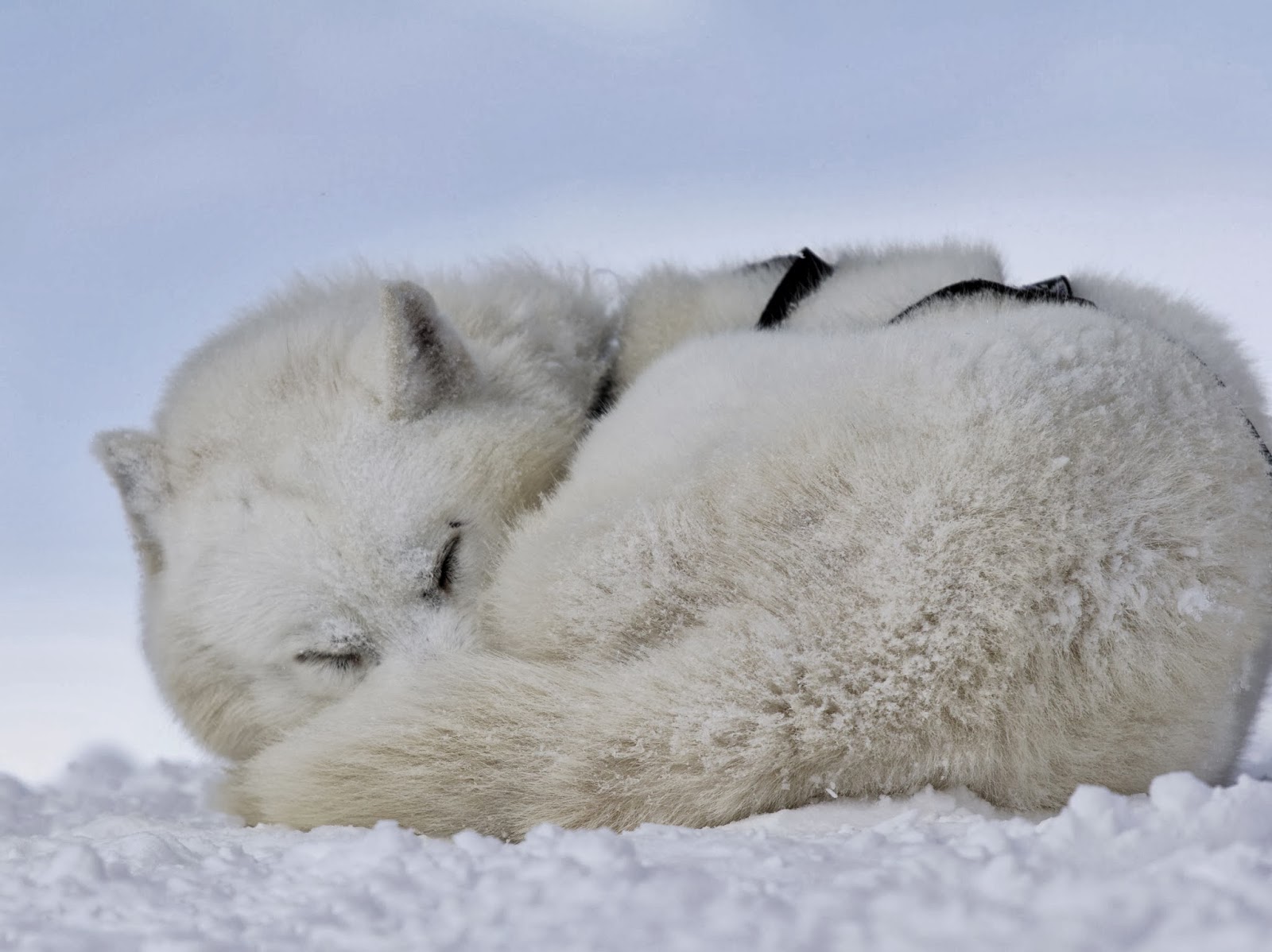
Yes, your dog is related to wolves who survive annual frigid conditions, but our domestic dogs are not wolves. For starters, snow is insulating, so for the dogs who are bred for blizzard conditions (like Huskies, Malamutes, and other double coated breeds) the snow greatly helps them survive the bone chilling cold. They curl up in the snow, let the snow fall on them, tuck their feet under their warm body, and their tail covers their nose. They let the snow fall on them and they are very well insulated. This is often not what you find with most dogs in suburban/urban environments - especially Pugs who are both short coated, and their tail won't reach their pushed in nose!
The dogs that also survive these conditions, like the wolves, need to be conditioned to the cold weather and get physically prepared for it. Dogs running in the Iditarod are not dogs that have lived in a warm apartment for 10 months, then just travel north for a two week jaunt in the Tundra. They train, like Olympians, for endurance, speed, and acclimation to the weather.
Boots? Coats? For my DOG? Really?
In the city, we shovel sidewalks, exposing the naked pads of their feet to icy concrete. This is perhaps the part I'm most concerned about. The pads of their feet are completely exposed and can get frostbite, just like our exposed skin. Add salt to those sidewalks (to make it easier for people to walk on) and your poor dog is literally adding salt to the wounds of frostbite & cuts caused by the salt.
Do your dog a solid, and condition them to boots if you live in the city. Not only will it protect your pup from salt, and is the easiest way to prevent ice balls forming in between the paw pads (which can be very painful), but they are easier to clean than Mushers Wax (more on that in a moment). If conditioning them to boots is not an option, keep your walks brief and keep their skin safe.
Dogs can also suffer frostbite to their ears, nose, and other exposed areas. Short haired breeds (like the French Bulldog, Pointer, Greyhounds, etc) don't have enough fur or fat to be protective with these conditions, so consider getting these dogs a jacket for their morning walk.
Lastly, older dogs can't regulate their temperature as easily. If your pet suffers from arthritis or other age related conditions, a coat can help them feel more comfortable.
A Note On Mushers Wax/Mushers Secret:
I grew up with a dog-sledding team and we used wax on their paws frequently to prevent snow balls turning to ice between the dogs paws, which can cause significant pain. It is basically like chap-stick, in that it was a thin protective layer against the elements, but I wouldn't consider it a means of keeping my lips warm. It also doesn't prevent salt from cutting into the skin.
In the city, Mushers Secret is better than nothing, but it really is designed for running in the snow. Salt on sidewalks can stick to the wax, creating a nice mess to clean up with your dog runs through your house when you get home. It's not designed to keep their paws warm, it's not designed explicitly for salt protection, and they can still get frostbite, especially if they are walking through cold slush or bare sidewalks. That being said, it is absolutely better than nothing at all. I just don't want you to think that if you have Mushers Wax on your dogs paws, that your dog is totally 100% protected, and go on an epic 8 mile walk in the city with your pup in this weather. It's much better for an epic romp in the woods on freshly fallen snow, or for a short walk around your neighborhood.
Final Thoughts:
If you are a city dweller, condition your dog to liking the boots - one boot at a time, over a period of a few days. Then add a second boot, and continue until your dog is really comfortable with the process. This will ensure your dog is comfortable and conditioned properly.
Or, just go hog wild, put all four paws in the boots, and upload your pup to Youtube.
Get your pup, especially short coated dogs, older dogs, and dogs who can't regulate their temperatures very well, a snazzy warm coat. Keep an eye on their ears, nose and paw pads, as they will likely be the first to show signs of frostbite.
And as our dogs are related to wolves, they are no more wolves than we are chimps. Though I love the idea of climbing trees on the equator, I'm not conditioned for it, and neither is my Border Collie to the Polar Vortex. We're staying in and staying warm.
Led Zeppelin, or "Zeppy", our Greyhound, passed away on Labor Day (he was the "Lead Reporter" on this site). He was just shy of 9 years old. It's hard to put into words the first time you have the opportunity and responsibility of giving your friend the last gift you can give them - the gift of taking away their pain.
He jumped off the couch to greet us when we got back from celebrating Labor Day with friends. When he jumped off the couch, I heard a crack, and saw his leg was broken. It was then that I knew that Zep was going to Angell Memorial, and not coming home. I am not a vet, as I say often on this blog - but I worked with a lovely woman who adopted many greyhounds over my time working for her, and knowing her after my employment at that hospital ended. She should be the saint of Greyhounds, because she adopted older Greys, loved them, many times for a short while, until they would get bone cancer and pass on. It broke her heart every time because she loved those dogs with every ounce of her being, and when we got Zeppelin, I knew we'd be saying goodbye in a similar fashion. We just thought it would be later.
When it's your dog, you always think it's "later".
My dear friend (and Zep's vet) drove my husband and Zeppy to the hospital, and I met them after I fed our baby. I wanted them to say "Nope - clumsy Greyhound Syndrome - he's patched up and ready to go!", but the clinical signs were there. I just knew, and I never in my life wanted to be so wrong.
We went into the room, Zeppy got to hang out with us. He was in so much pain, but he still tried his best to come over to us. We lay him down on a blanket, the Emergency Vet met us in the room, and Zep put his head in my lap. My husband talked to him, pet his head and shoulder while the medication started to numb his pain. I saw into his eyes, and saw relief.
Often, we put human terms and feelings onto our dogs. I know what I saw, and I saw an animal who wasn't hurting for the last minute of his life.
He looked at me, he signed a big sigh, lay his head on my lap, and fell asleep.
There is no way to ask our pets if they want to go on living, or if they want us to end their suffering. We can't ask them "hey, you have maybe 6 months to a year to live, but we have to take your leg. What do you think?" We can only do our best, as we always do the best for our animals. We might not be able to give them the best quality food, but we can give them the best we can afford. We might not be able to let them off leash, but we can find ways to let them be dogs. We might make them live indoors instead of rolling in the dirt, but we find ways to enrich their lives, and in return for all we ask of them, they give us loyalty, affection, and sad puppy dog eyes. They keep our feet warm, and our houses safe from intruders. They give us funny stories, and occasional stains on the carpet (or in Zeppy's case, the fake Christmas Tree because he thought that meant he had indoor privileges).
They give us an opportunity to connect, to be responsible for something else, and to be more human. In Zep's case, he taught me how to take a chill pill and relax.
I have no idea what Zeppelin would have wanted, but I do not regret the decision we made. I think back to the horrible sound of his bones cracking, his howling, and his uncontrollable panting - and then I think of his head relaxing, his eyes looking directly into mine, and a sigh of relief. We made that decision for Zep, and I'm not sure I'd make it for every dog we have, but I do think it was the right call for him.
That doesn't mean it's an easy call, and it doesn't mean it's the right call for every dog. But for him, for us, and for the facts on the table, we did what we thought was right for him.
We did the best we could, Buddy. We did the best we could.
Rest in peace, Zep. And keep an eye on my friend Paul. He's the guy playing the piano by the fireplace.
About 5 months ago, Kyjen Toy Company sent me a toy for Zeppelin. I told them I would write up a review of this toy. Then, Christmas happened, as did 5 months of morning sickness (so we're going to have to look for good toys for small humans soon!) - and I am JUST now getting around to writing their review! Thanks, Kyjen, for being so patient!
So when they offered to send me a toy for review, I was pretty excited. They sent me a large version of their new Seamsters Line , which combines Rubber with Rawhide, mental stimulation with added bonus of making the rubber toy into a puzzle toy as well.
Both dogs got to try this toy, though the Border Collie rather "helped herself" to the Seamster after the Greyhound had his fun.
First, the Greyhound:
Zeppy really doesn't get into toys. He likes Kongs, as long as they aren't too challenging. He does, however, like to chew on things. Bully sticks, rawhides, and once, my glasses. When we presented him with this toy, he got really excited, took it from me, and went to his bed to chew. I figured he'd be done in just a couple minutes, but he worked on this toy for a solid half an hour. I took the toy away from him, presented it to him the next day, and he worked on it until the rawhide was done. He loved it - it was durable enough for him, and he really had a good time!
Second, the Border Collie:
Let me first start off by saying, I strung this toy together incorrectly. The toy comes with a rawhide refill - basically a strip of rawhide that you soak for a few minutes so it becomes pliable, then you thread it through the loops to put the pieces of the toy together. I didn't have to thread anything when Zep was working on the toy since it came pre-strung. When I threaded it, I got confused and went the wrong way, which later would prove to be a bad move on my part.
Zeppy got bored with the toy when it was threaded wrong, so he left it alone after a few minutes of frustration. Sadie, our BC, decided to give it a shot. Sadie's basic coping mechanism for anything challenging is to run through it, tear through it, or throw it into the ground. She started by throwing the rubber toy into the ground (which works for her Linkables), and it didn't work. So she decided to chew through the rubber rungs that held the rawhide in place, which was rather impressive. By the time I realized that she was chewing THROUGH the outer rings of the toy instead of chewing the rawhide (she had her back to me, and chewing rawhide looks very similar to chewing tough rubber!), it was too late for part of the toy. However, I will say, that she had a rather good time, and looked really happy while she was destroying the only toy that has ever given her "brother" any joy.
It wasn't until after this had happened that my husband noticed that the threading was incorrect, which explains everything that happened above.
In Conclusion:
I really do like this toy for dogs that love rawhide, and also need mental stimulation. As stated earlier, for one of our dogs, this was the only toy that has ever given him the mental stimulation that he needs, in a fashion that he enjoyed. He's not a destructive chewer, but does love to chew on rawhides and other animal bits. However, for more destructive chewers, or dogs that have maybe chewed through other types of rubber toys as a coping mechanism, the rubber rings on the outside of the toy might not hold up over time.
I loved how innovative the toy was - taking dense rubber and threading rawhide through it to make a Super-Toy. It's definitely one that I'm going to continue to recommend to my students (puppies will get a kick out of this!), but do keep in mind that there it should be supervised to make sure the dog doesn't chew the wrong parts of the toy. I think threading the toy incorrectly (my fault, entirely!) also contributed to the destruction, but if I messed up the threading, anyone can mess up the threading, so it's something to keep in mind.
EVENT: Dog Play VideoMany of you have asked about understanding dog play better. Come join us on Sunday February 12th at 7:00 pm to watch some video and discuss dog play. Send an email to magic@magicalmutt.com if you wish to attend.
It's free to the public, and there will be snacks for humans. Please leave Fido at home for this event, but bring lots of questions regarding what's normal, and what's not, when it comes to Dog Play!
Great seminar for those who attend dog parks, and aren't sure what's normal play behavior. Is your dog being bullied at the park? Is your dog the bully? Is growling normal during play? Come and find out!
A student sent me this video yesterday, and I snorted seltzer out of my nose. I'm pretty sure the dog is named Jesus Christ.....
Humorous as the video is, it really illustrates why it's critical to have a reliable recall on your dog before letting them off leash. Dogs have 4 legs, we have 2. Guess who's going to win in a foot race every time? More importantly consider the following scenario: Your incredibly friendly, social dog is racing across a field to say hi to another dog - but that dog might not be too keen on your dogs exuberant greeting behavior, and may react with a growl, lunge, or bite.
Rule #1 of dog training: Your dog might be friendly, but that doesn't mean every other dog wants to be it's friend. Rule #2 of dog training: Have a solid recall on your dog.
How to Get A Reliable Recall:
Here is a quick video on theory:
and how to use a long line to start recall training:
You can also take formal classes to work on recall, or join a club. Every basic manners class should have dedicate time to recall basics while working on other basic skills (sit, down, stay, don't eat that), and some classes are even designed specifically for working on one thing only- getting your dog to come when called.
And then, there is my favorite way to work recall and off leash skills with a dog: Sports. In most dog sports, (Obedience, Rally, Agility, Frisbee, etc), the dog has to be able to execute skills, such as "go this way", "do this thing", "come" and "stay" while off leash...and it looks REALLY cool!
The reason this works? It's fun for the handler, and for the dog. Mark
demonstrates the basic principle of come when called while competing with his dog - YOU HAVE TO BE
MORE EXCITING THAN ALL THOSE OTHER EXCITING THINGS, which isn't always easy to do, and he never yells at the dog for coming to him. "Fido, come here NOW" and getting a whack on the nose, or getting his nails clipped is a surefire way to insure your dog never comes when you call.
So in short:
- Never let your dog off leash until you have a reliable recall on your dog.
- Use a long line to work longer distances.
- Find a way to be more exciting than a squirrel (highly motivating treats, frisbee, ball, whatever your dog likes)
- If your dog doesn't come, make it easier for your dog to be successful (shorter distance/fewer distractions)
- Keep practicing, join a club, take a class, or start dabbling in sports to make things interesting and fun!
I frequently mention the Kyjen Tail Teaser (please, don't google "Tail Teaser" - lots of interesting things come up on image search.) I love this toy, and better yet, so does my high energy dog.
Here is a short video on how to use the toy in a small space, still work on great skills (such as Take It, Drop It and Tug), and exercise your dog! (Thanks to Peter at Riverdog in Union Square for introducing us to this wonderful toy!)
For more information on how to keep your dog tired, click here.
For more information on teaching your dog Drop it and Leave it, click here.
And for more information on Tug of War (is it good, is it bad, how to play, does it cause aggression?) click here.
We are all specialists, and we overlap. But who will be right for your particular needs?
Often, when people call a trainer, they might be referred instead to a Behavior Consultant or a Veterinary Behaviorist. Sometimes, when you see your vet, they might recommend a trainer for an issue at home. The guy at the dog park suggests that you need a Behavioralist
(pssst: there is no such thing as a behavioralist in the dog training/behavior world. It's a political science term).
Here is a quick breakdown as to what exactly a Trainer, Veterinary Behaviorist, and Behavior Consultant do, the overlap, how each can help, and ways to find the appropriate specialist for you!
Trainer
Some Associated Certifications - CPDT-KA & CPDT-KSA (Certification Council of Pet Dog Trainers); ABC (Animal Behavior College); KPCT (Karen Pryor Academy)
K9 S.A.T's:
"Sit: Butt on ground.
Down: Lay on belly.
I think I got it.."
What trainers do:
Trainers are the teachers of the animal world, and the way they teach takes several different forms. They can teach group classes that works on the basics (sit, down, stay, recall), individual or private training in your home (home school!), and sports (such as agility, nose-work, K9 disk). They also can focus on formal obedience, rally, dock diving, and other activities in the form of a club, class, or organization.
Trainers also focus on manners - if you have a door dasher or a counter surfer, you might call a trainer. If you have a dog that is reactive on a leash walk, looking to prepare for a new baby, or puppy manners, a trainer is the right specialist for you.
Trainers are the Teachers of the dog world. They focus on giving necessary skills to cope in a human environment.
Where they overlap with other specialists:
Trainers tend to work on tricks, manners, and sports - but dog trainers also work to affect emotion and behavior. Sometimes, a dog that is exhibiting bad manners might have an acute emotional response to leash walks, or being left alone. Many trainers can help with mild-moderate cases separation anxiety, leash reactivity, mild fear of strangers, and some cases of aggression.
.
Where a trainer would not be appropriate:
-Trainers are not veterinarians. Though trainers can suspect some medical problems, and even guess correctly what the problem is, they do not have the medical expertise to diagnose medical situations in an animal and have no business diagnosing ANY medical issue. A good trainer will say "this looks wrong. See your vet".
-When a behavior is so acute (a dog who shuts down in a classroom setting, a dog who aggresses at any new person in the home, severe separation anxiety), and the only way to help the animal is to work on emotional response, a Behavior Consultant or Veterinary Behaviorist might be more appropriate depending on the degree of the problem behavior.
Where a trainer WOULD be appropriate:
-Classroom work (puppy class; adolescent class; basic manners; specialized classes)
-Door dashing
-Normal "manners" issues
-Sports
-Reactivity to dogs, other people
-Mild/moderate fear issues.
-Referred by a Behavior Consultant or a Veterinary Behaviorist.
What Behavior Consultants do:
Behavior Consultants have a scientific interest in why animals do what they do - and more specifically, why a behavior goes awry. They are the psychologists of the animal world.
If a dog is having an acute emotional response to the mailman, is aggressing at people and has a bite history, has moderate-severe separation anxiety, and seems to be really having a difficult time emotionally with one (or more) parts of daily life, then a Behavior Consultant might be the way for you to go.
Real behavior consultants have certifications and have taken classes / attended seminars on animal behavior.
Applied Animal Behaviorists have a PhD in an animal related field.
If a guy is putting a prong collar on a dog and has never taken a class in animal behavior, he's not a behaviorist.
"Tell me about her" "I don't know how I can cope. She's such a bitch!" "Your mother?!?" "No, my Weimaraner!"
Where they overlap with other specialists:
Behavior Consultants are the bridge between the vets and the trainers, in that they use their training background to teach troubled dogs behaviors to build confidence, or teach dogs behaviors that are incompatible to the problem behavior they are exhibiting. Consultants also work very closely with Veterinary Behavior Specialists, and as a result, tend to have a working knowledge of some medical conditions that can produce (or exacerbate) certain behaviors.
A dog may act aggressively for either behavioral or medical reasons, or a combination of both. A good consultant would work closely with the client and the vet, to order medical tests that might give some insight to behavior problems, use both training and medical tools in order to help the animal cope. Not all behavior is medically related, but a good Behavior Consultant will be able to recognize certain red flags that might be an indicator that there is more going on to the behavior than meets the eye.
Where a Behavior Consultant would not be appropriate:
-Though Behavior Consultants work closely with Vets and Veterinary Behaviorists, they can not diagnose medical conditions, nor can they prescribe medicine to your pet (unless, they also have a medical degree).
Where a Behavior Consultant WOULD be appropriate:
-Separation Anxiety
-Moderate to Severe cases of leash aggression/reactivity
-Mild-Moderate cases of suspected compulsive disorders
-If you suspect there might be a link between health and behavior
-Any dog with an existing bite history/you suspect your dog will bite
-Emotional / anxiety disorders or behaviors driving by intense fear/anxiety in your dog
-Referred by a Veterinary Behaviorist or a Trainer.
What Veterinary Behaviorists do:
I can't say it any better than the Tufts Cummings School puts it, so I'll just quote from them:
Veterinary behaviorists are veterinarians with a special interest in
animal behavior. Some veterinary behaviorists have completed residency
programs after graduating from veterinary school and some have passed
an exam given by the American College of Veterinary Behaviorists.
Diplomates of the American College of Veterinary Behaviorists
(ACVB) have attained specialist status in veterinary behavior. They
are doctors of veterinary medicine who received additional training
in clinical veterinary behavior and satisfied the certification requirements
of the American College of Veterinary Behaviorists. These veterinary
behaviorists are “board-certified” diplomats of the American
College of Veterinary Behaviorists.
Veterinary behaviorists are trained and licensed to diagnose
and treat problems in animals, whether they are medical or behavioral.
Being veterinarians, these behaviorists can diagnose medical problems
that may be contributing to the animals’ behavioral problems.
A veterinary behaviorist is also licensed to prescribe drugs and is
familiar with psychotropic medications (tranquilizers and anti-depressants),
their uses and side effects.
Where they overlap with other specialists:
Veterinary Behaviorists have an interest in behavior problems (like the consultant) and they use some training techniques to modify behavior (like the trainer). They have the added benefit of a medical degree so they can most directly treat AND diagnose behavior problems (one stop shopping). The Veterinary Behaviorist does not always use medication to treat behavior problems, but they are the most qualified to see the links between behavior, nutrition and health, and can prescribe medication if necessary.They are often the person that is requested when a behavior is really out of the ordinary, medical issues are suspected/documented, or a last ditch effort before sadder, more drastic measures are taken.
Veterinary Behavior Specialists are also commonly known as "the guys who deal with OCD". If you have a dog that has a behavior that is just extreme in some way (licks his leg to the point of bleeding or compulsion; chases light or shadows; chases his tail compulsively and can't be distracted; behaviors that look cute at first, but are REALLY problematic in real life), there is help. We in Massachusetts are perhaps the luckiest people when it comes to dog behavior problems - we have the foremost researcher and Veterinary Behaviorist, Nicholas Dodman BVMS, DACVB, DACVA (Tufts Cummings Behavior Clinic in Grafton, and you probably have seen him on Animal Planet) AND Sheila Segurson D’Arpino DVM, DACV (Animal Rescue League in Boston)
The dog in the above video is spinning compulsively, and can't seem to stop. Even while the other dogs bark and lunge while spinning, this dog is undeterred from this problem behavior. If you see compulsive type behaviors, see a vet behavior specialist.
There are only about 60 Veterinary Behavior Specialists available. That
being said, if you are not lucky enough to live near a specialist, some
(like Dr. Dodman) partake in a Vet Fax program,
where your vet will work with a behavior specialist in your region to
get you the help you require. As a result of being a rare bird, and a
very specialized niche, Vet Behavior Specialists are not cheap - but if
you have a real problem behavior, or this is your last ditch effort to
make things work, their experience is invaluable.
Where a Veterinary Behaviorist would not be appropriate:
-If you have a dog who is exuberantly jumping up on you at home, or you have a dog that needs a puppy class, see a trainer.
-If you need help with recalling your dog in distracting situations, call a trainer.
-If you need help with a leash aggressive dog that isn't globally fearful, talk with a Trainer or a Behavior Consultant.
Where a Veterinary Behaviorist WOULD be appropriate:
-Compulsive Disorders/Suspected Compulsive disorders that can cause harm to the animal or others & can not be redirected.
-Behaviors that are extreme or excessive (severe separation anxiety, where a dog is causing himself physical harm due to anxiety; )
-Behaviors that are likely related to health or a medical situation.
- "The behavior was sudden, and went away as if nothing happened. It was like a light switch."
-Referred by a Trainer, your regular Vet, or a Behavior Consultant.
I hope this helps you figure out what each specialist does, how we overlap (there is quite a bit of overlap!) and what specialist might help you with your specific needs. To get you started, here are some sites to help you find a qualified professional in your area: If you need help finding a trainer, check out the CCPDT Trainer Search. If you need help finding a behavior consultant, check out the IAABC Behavior Consultant Search If you need help finding a board certified veterinary behaviorist, check out the DACVB list.









 l
l

